Darabi’s project Why Don’t You Dance? is inspired by the “Woman, Life, Freedom” movement, a recent nationwide protest against the restrictive laws imposed on women by the Iranian government. The exhibition is divided into three sections, each centering on a pivotal figure from the Iranian popular dance scene. The parts function independently while also connecting to the others across time and between Iran and its diaspora.
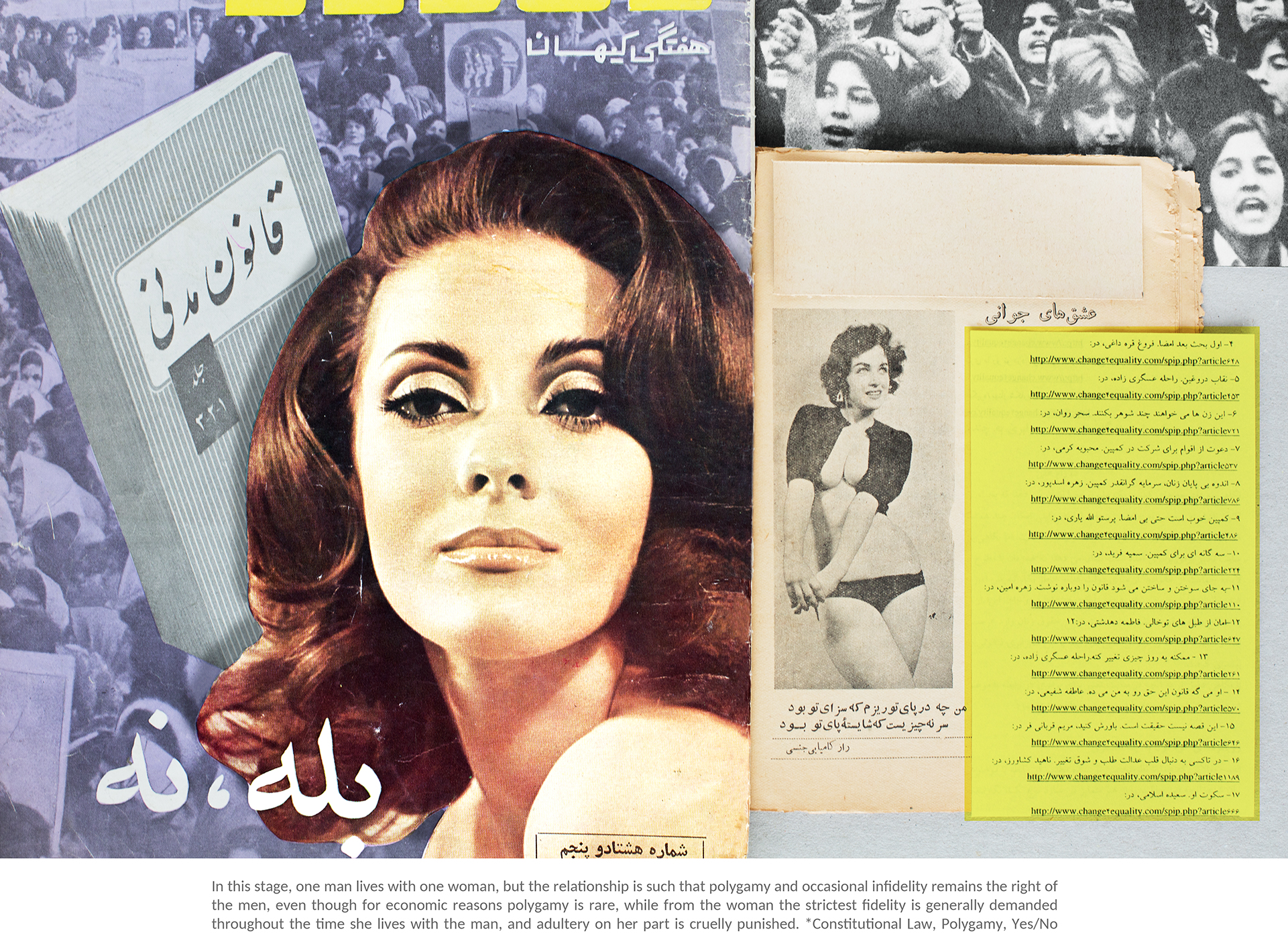
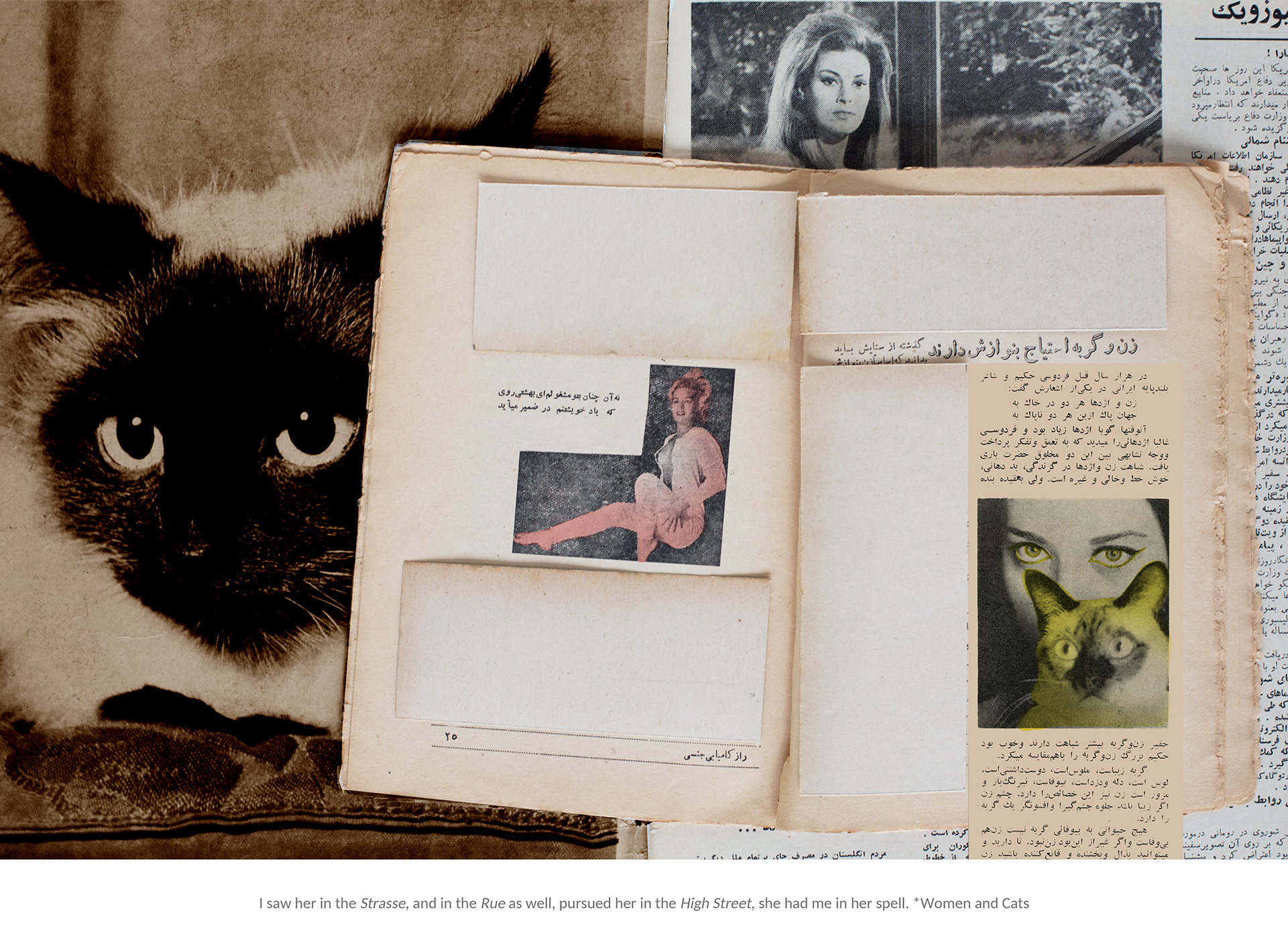
Mahvash, a leading cabaret figure of the 1950s, forms the foundation of the project. Drawing on The Secrets of Sexual Fulfillment (1957), Mahvash’s fictional biography, Darabi examines how dance functioned as a tool of protest during the 1979 Revolution, and how women’s appearance and self-expression became subject to ever-tighter controls. She produces her own take on this landmark book through a series of collages in which she assembles magazine pages, fragments of text, ephemera and her own photographs.
The second figure is Jamileh, a renowned exponent of belly dance and “Jaheli dance,” a popular style rooted in Iranian urban culture. In this part of the exhibition, Darabi explores the fluidity and tension between tradition and modernity in a series of three videos developed in collaboration with a Berlin-based collective of dancers and choreographers.
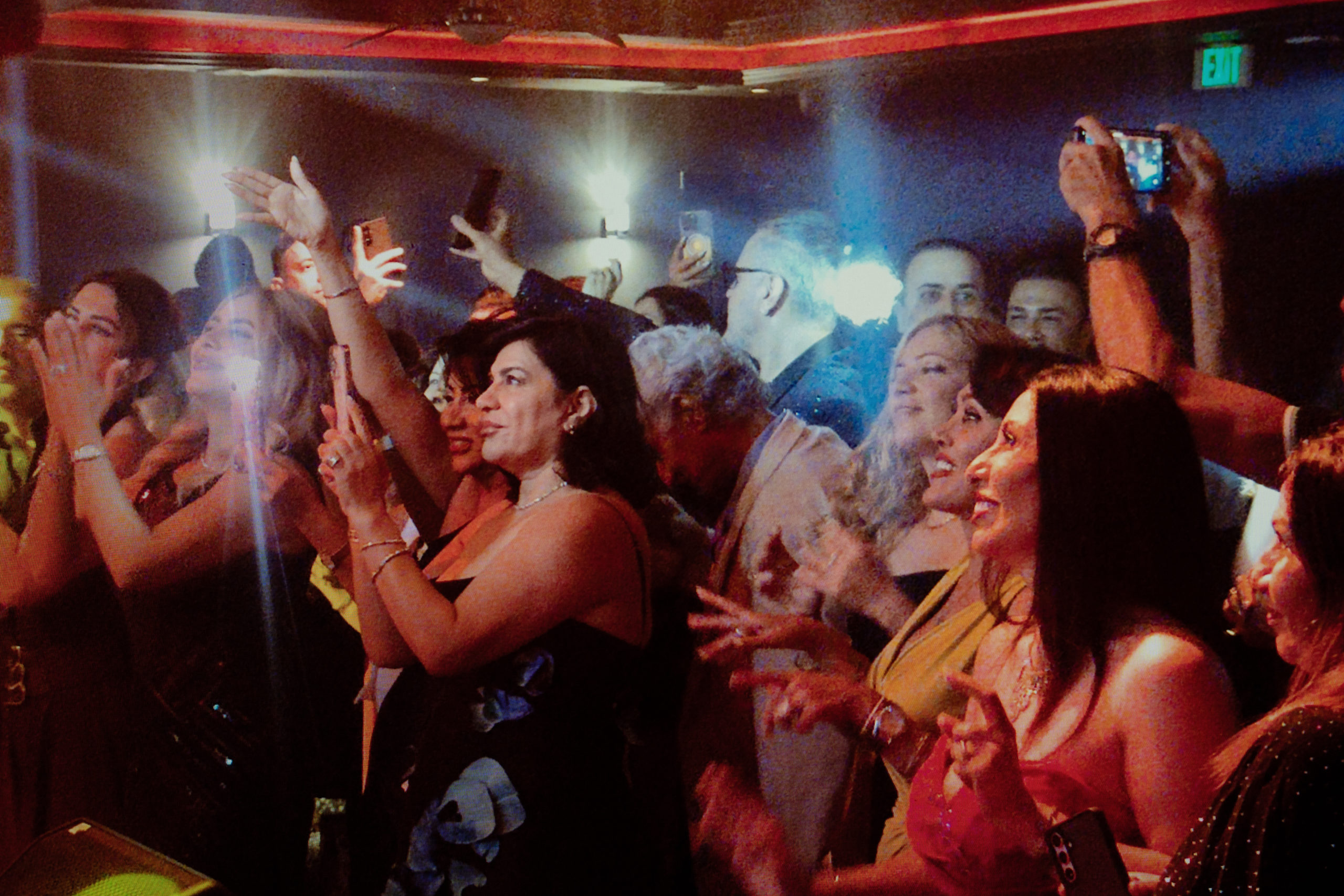
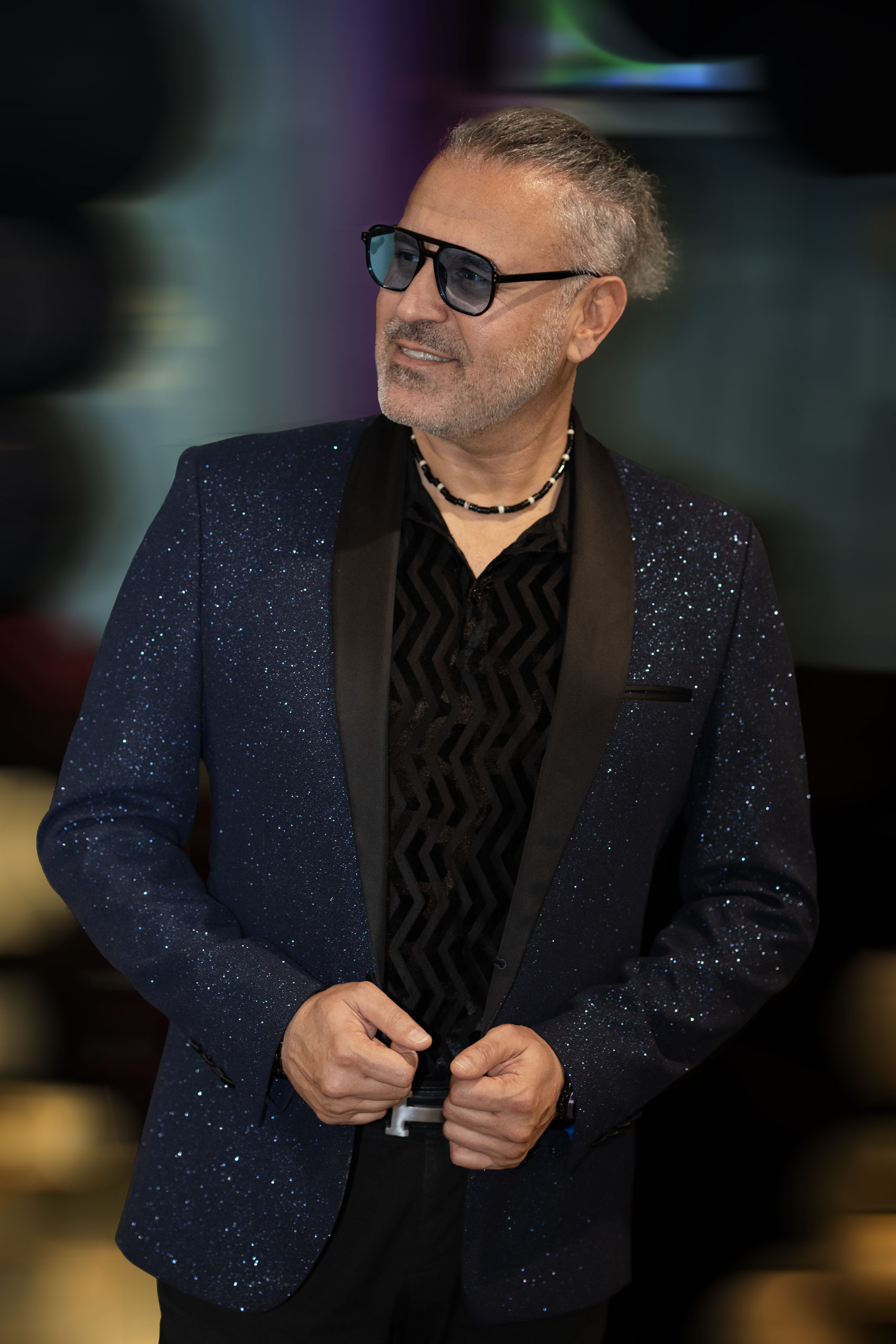
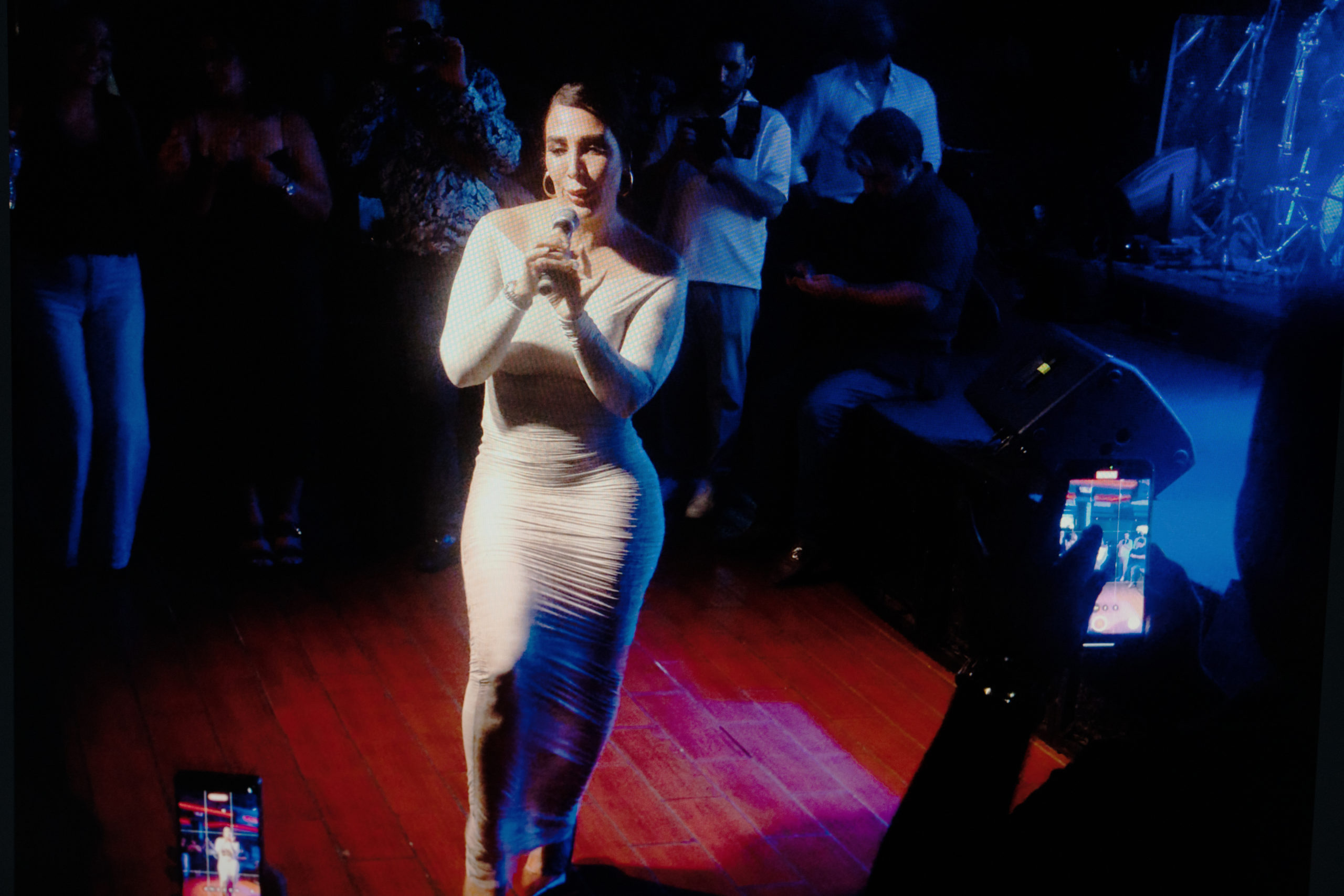
The third section of the exhibition revolves around Mohammad Khordadjan, a dancer and choreographer from the Iranian pop scene in Los Angeles. Here, Darabi turns to the diaspora and to practices developed in exile, documenting the nights at the legendary Cabaret Tehran, a central gathering place for Iranians in Southern California.
Drawing on the stories of these three figures, Darabi reveals how dance has endured through a shift in Iranian society – away from traditional gender norms and toward a more modernist discourse. Here, entertainment becomes a political act, archives become tools of resistance, and performance becomes an expression of joyful resilience.