Swiss artist Corinne Vionnet (b. 1969) was among the first to turn her attention to the relentless stream of images we consume online. She has devoted over two decades to examining and reworking the travel photographs that circulate in an endless loop across our screens.
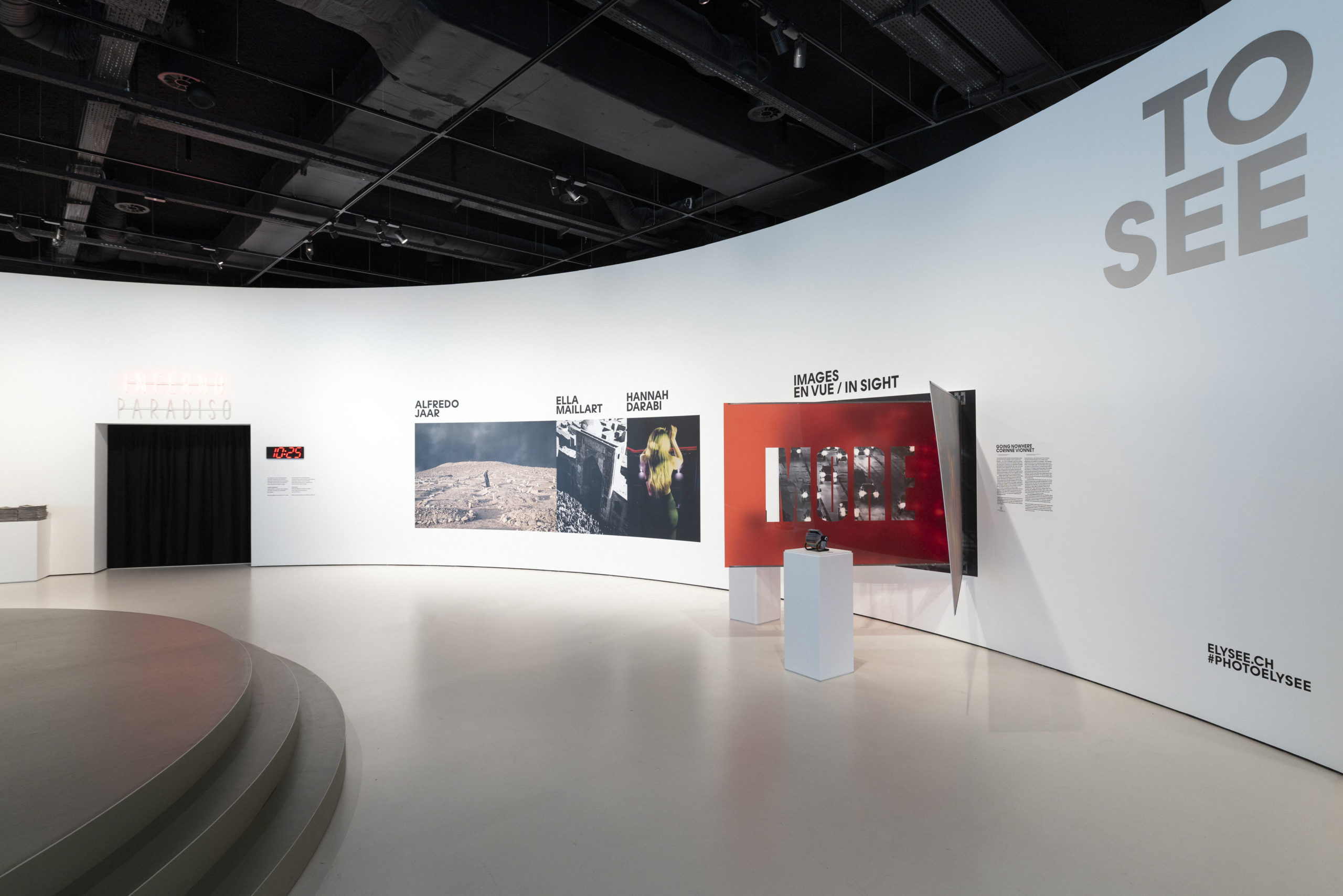
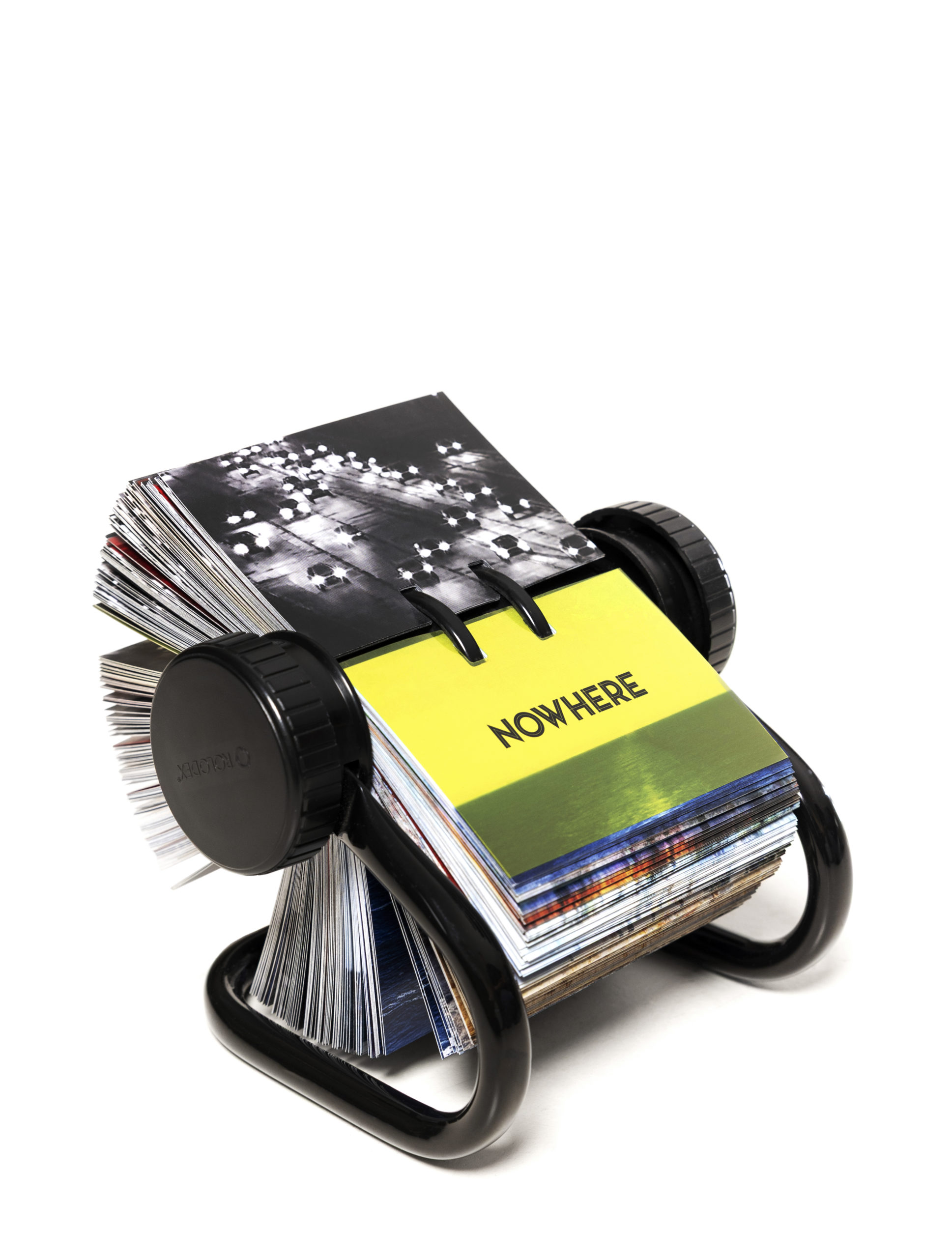
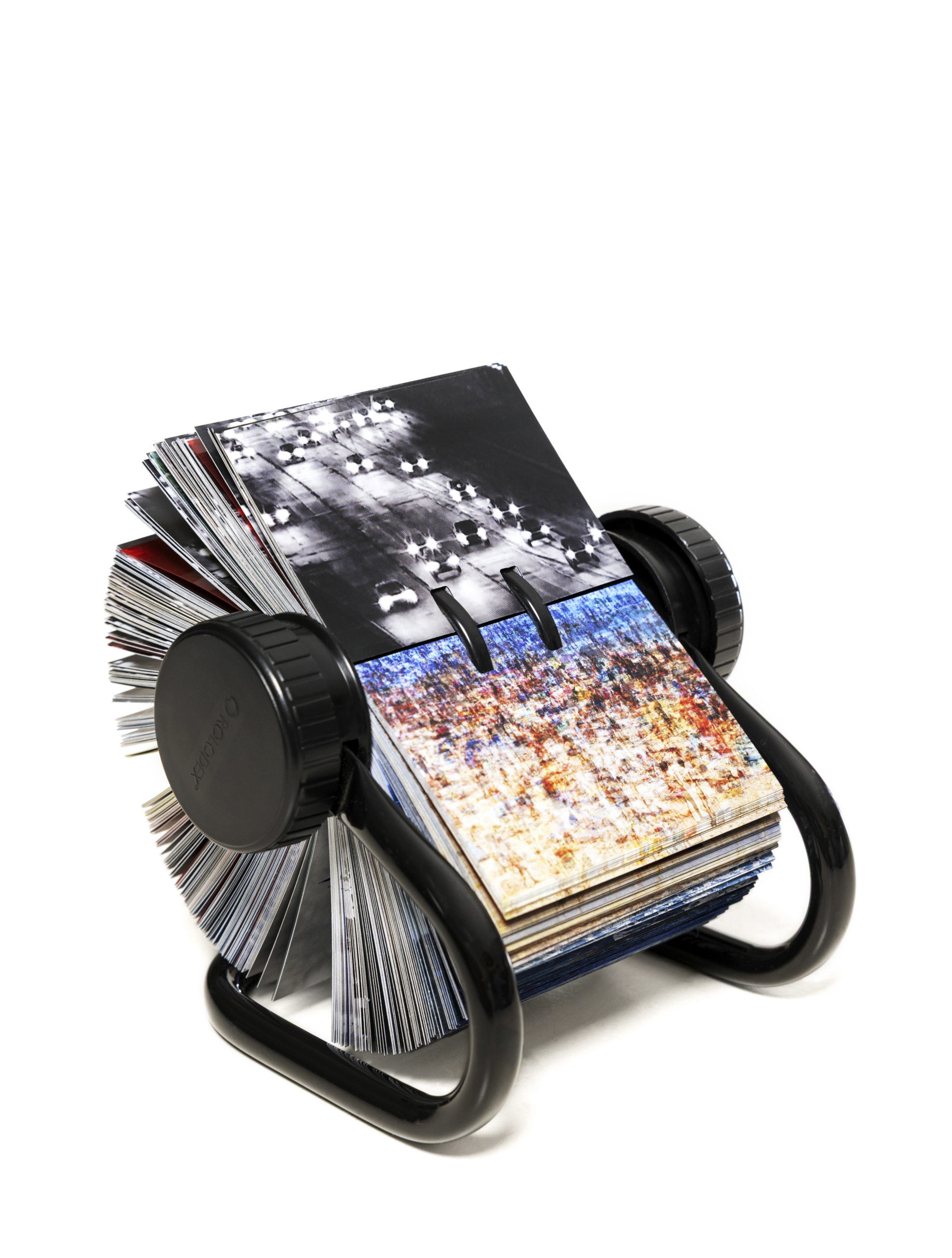
Going Nowhere, commissioned by Photo Elysée, is an artist’s book portraying a world awash with images. Vionnet takes the Rolodex – the rotating address file that once adorned desks before the dawn of the digital age – and gives it a new function, transforming it into a visual device that probes the workings of collective memory in our modern society.
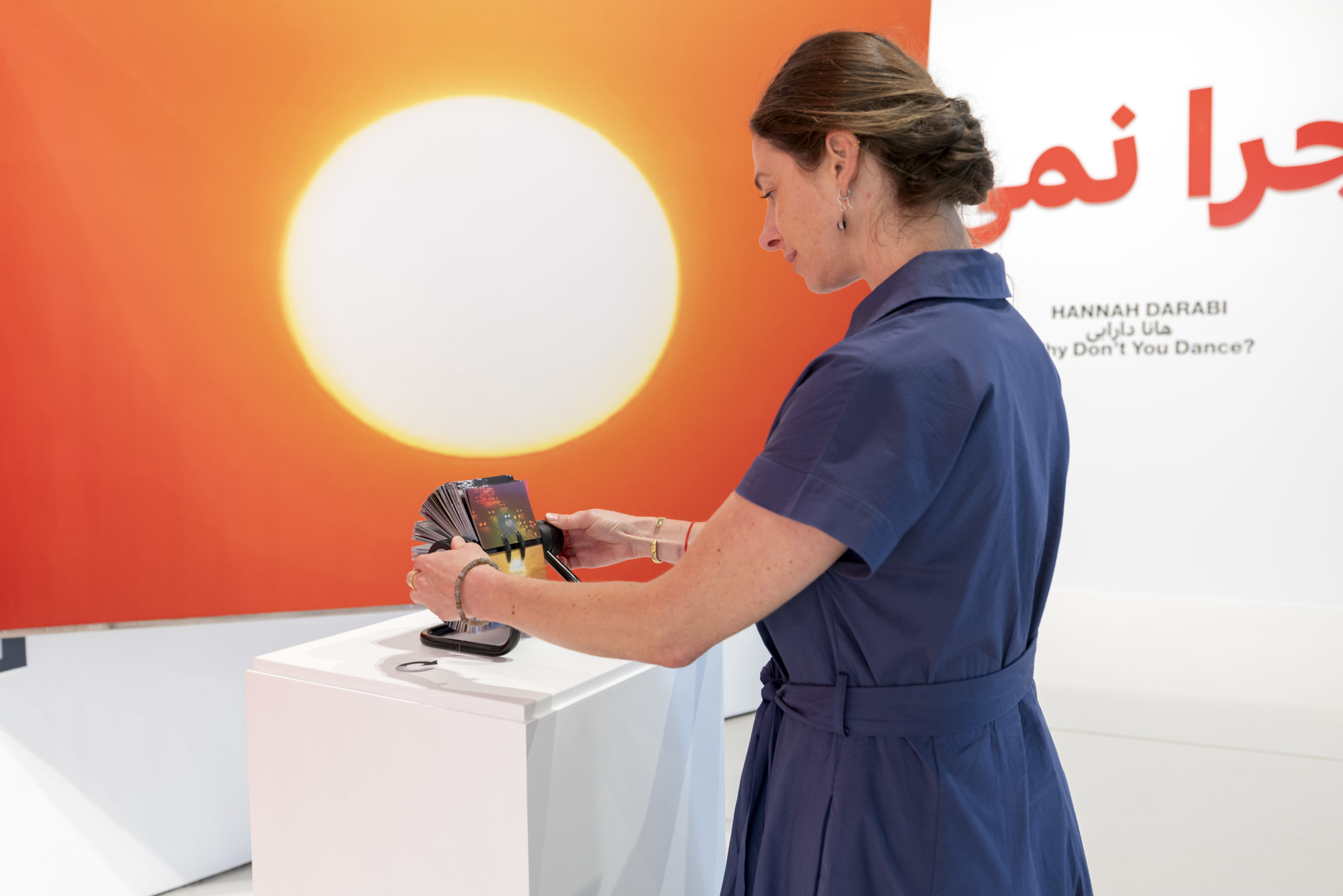
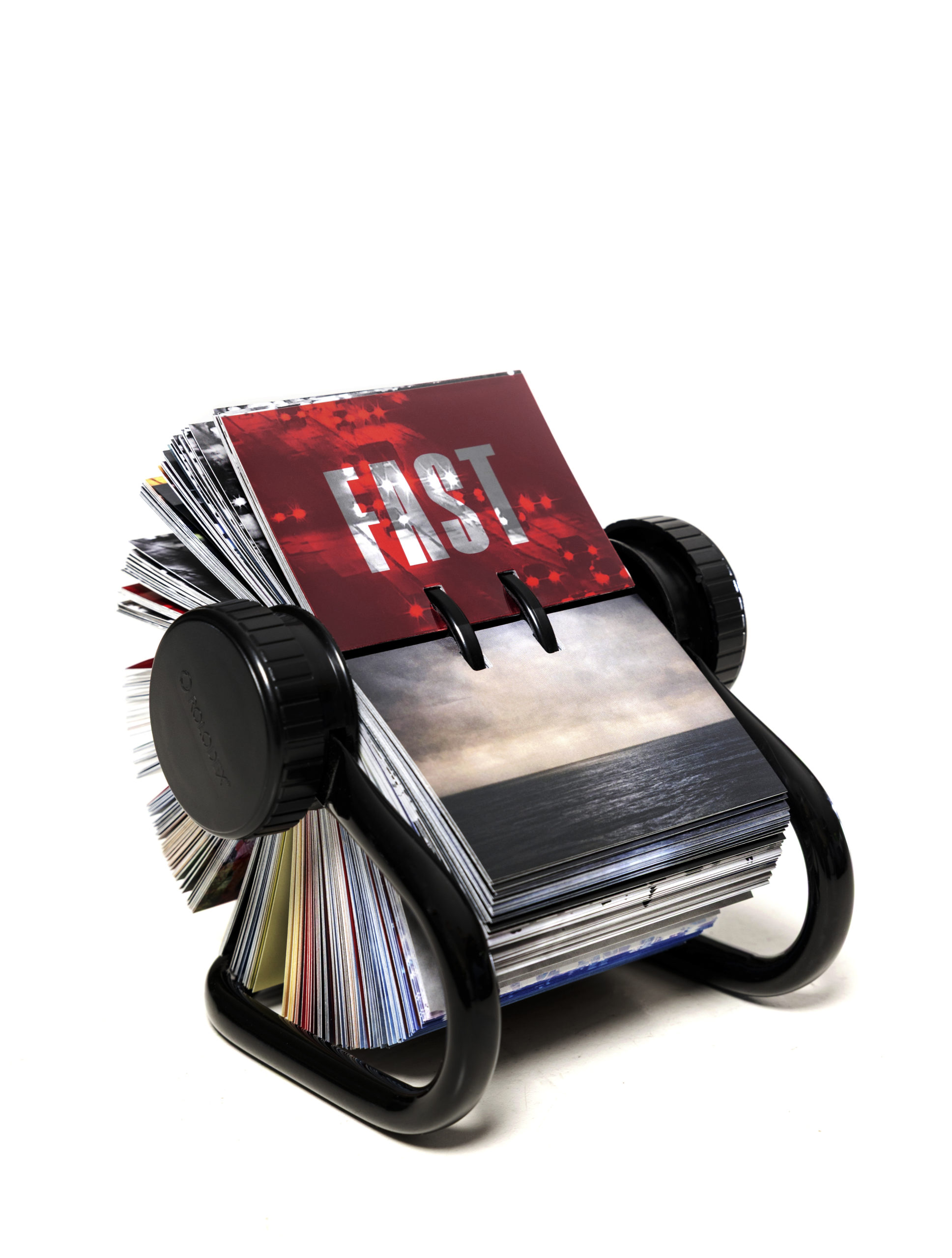
Turning the Rolodex sets 444 double-sided cards in motion, revealing two sides of the same story: on one side, screenshots of night-time traffic surveillance footage pass before our eyes like a single continuous shot; on the other, images gathered from the internet arouse our inner wanderlust and desire for freedom. As it turns, the Rolodex produces a soft clicking sound that punctuates the sequence, breaking the flow of the images into fragments. Like a wheel of fortune, it spins unpredictably, leaving the viewer’s gaze to chance. And throughout all of this, the title returns time and again: Going Nowhere, a destination that sounds like a bad omen.
Vionnet’s Rolodex stirs our memory. At first, the images feel immediately familiar: the sun, a palm tree, an airplane – the stock imagery of relaxing breaks in far-flung locales. The images linger and, soon, a sense of déjà vu sets in. We feel as though we are caught somewhere between boredom and bewilderment, between the reassuring pull of routine and the unease of being trapped in a vicious cycle.
As the sequences cycle, the sublime gives way to chaos, as though our eyes were being seared by relentless overexposure. Vionnet works through a process of accumulation, layering and transparency, bringing images together in juxtapositions that range from subtle to jarring. In doing so, she dismantles the symbols of an idealized elsewhere, and a sense of resistance against the dream factory slowly builds. The ocean turns black. Palm trees ignite. Intersecting airplane contrails form patterns that recall a cracked screen. Beaches become choked with people. And cruise ships pile up into a Tower of Babel on the brink of collapse.
The light, meanwhile, is hypnotic. First, it is cast by car headlights. Then by the sun. Or perhaps by a spotlight. It is everywhere, allowing no respite. Everything demands our constant attention, insisting on being seen until we are blinded by the act of looking. The viewer’s gaze inhabits a liminal space between the physical world and the world of screens – a realm of perpetual mirage. Tourists pose for selfies, while a dinosaur stranded on a beach appears alongside pyramids bathed in artificial light. Dream and reality merge into a single, eternal present.
Vionnet occasionally slips transparent printed sheets into this torrent of anonymous images. Slogan-like words flash before our eyes in a rapid-fire sequence: Happy. More. Fast. Better. Here, these familiar words – repeated relentlessly – are held up as the keys to power and success, hammering home the pressure we face to be happy and productive. Next come fleeting glimpses of personal memory, too brief and too ordinary to capture our gaze. They hint at an individual experience that is gradually swallowed up by the mass, revealing how uniform our dreams of getting away have become. Last but not least, “glitched” images heighten the sense that our technology-mediated world is coming apart at the seams.
In this culture of excess, Vionnet lays bare the machinery that surrounds us with an endless stream of standardized, repetitive images. Every day, more than 14 billion photos are shared in a carefully choreographed flow that turns us from mere spectators into producers of ephemeral data. Remembering every image we see today has become impossible. Yet they continue to linger in our minds, even though they appear to be taking us nowhere.
This commission was supported by the Leenaards Foundation, a partner of the Résonance project – a collaborative initiative under which the three Plateforme 10 museums commission thematic works from local artists.