

Thomas Brasey investigates the myth of the Brigands of Jorat
Article published on 28.08.2025
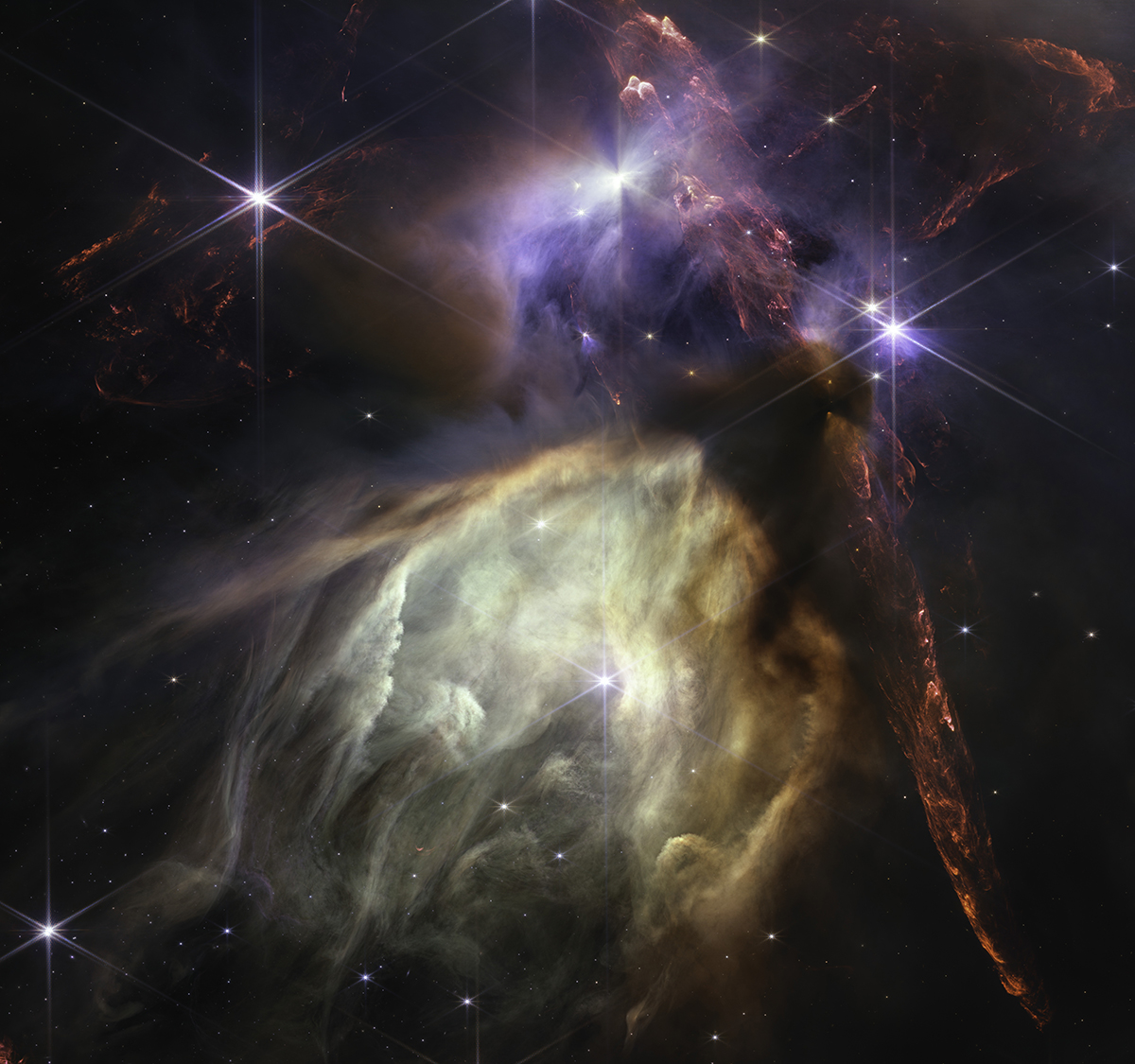
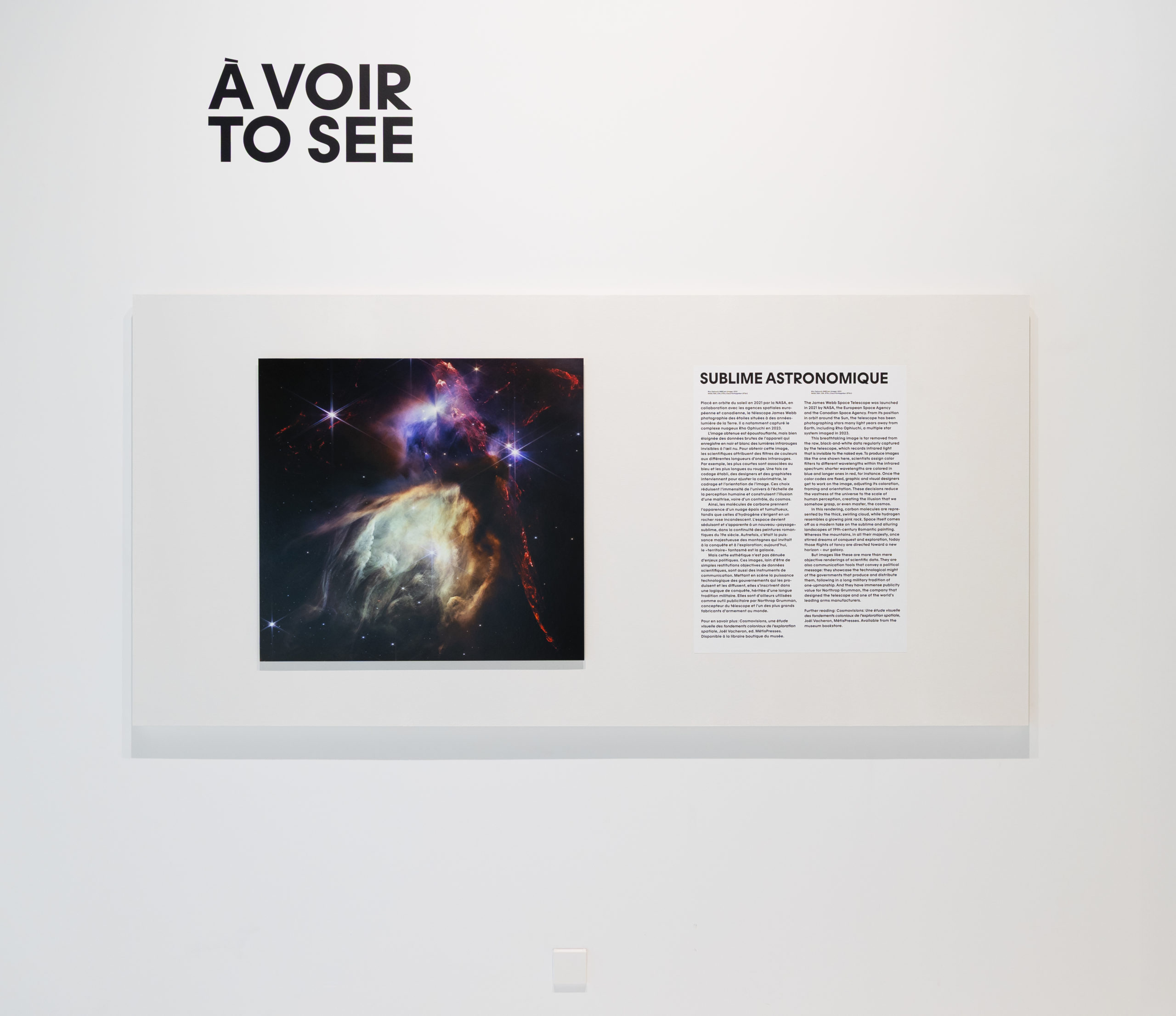
The James Webb Space Telescope was launched in 2021 by NASA, the European Space Agency and the Canadian Space Agency. From its position in orbit around the Sun, the telescope has been photographing stars many light years away from Earth, including Rho Ophiuchi, a multiple star system imaged in 2023.
This breathtaking image is far removed from the raw, black-and-white data regularly captured by the telescope, which records infrared light that is invisible to the naked eye. To produce images like the one shown here, scientists assign color filters to different wavelengths within the infrared spectrum: shorter wavelengths are colored in blue and longer ones in red, for instance. Once the color codes are fixed, graphic and visual designers get to work on the image, adjusting its coloration, framing and orientation. These decisions reduce the vastness of the universe to the scale of human perception, creating the illusion that we somehow grasp, or even master, the cosmos.
In this rendering, carbon molecules are represented by the thick, swirling cloud, while hydrogen resembles a glowing pink rock. Space itself comes off as a modern take on the sublime and alluring landscapes of 19th-century Romantic painting. Whereas the mountains, in all their majesty, once stirred dreams of conquest and exploration, today those flights of fancy are directed toward a new horizon – our galaxy.
But images like these are more than mere objective renderings of scientific data. They are also communication tools that convey a political message: they showcase the technological might of the governments that produce and distribute them, following in a long military tradition of one-upmanship. And they have immense publicity value for Northrop Grumman, the company that designed the telescope and one of the world’s leading arms manufacturers.
